
Static vs. Mobile Security: What Gold Coast Businesses Need in 2026
If you run a business on the Gold Coast, chances are you’ve already had the conversation — do we need a guard on-site, or are patrols enough?
It’s one of those questions that sounds simple until you actually try to answer it. Talk to five different security companies and you’ll get five different answers, each one conveniently pointing toward whatever they happen to sell most. Not exactly helpful when you’re trying to protect a warehouse in Yatala at 2 in the morning, or a retail store in Broadbeach that’s been hit twice in the last three months.
So here’s a straight breakdown. Static vs mobile security — what each one actually does, where each one holds up, and how Gold Coast businesses in 2026 are making the call.
Static vs Mobile Security: Start Here
Before anything else, let’s define static and mobile security properly, because these terms get thrown around loosely.
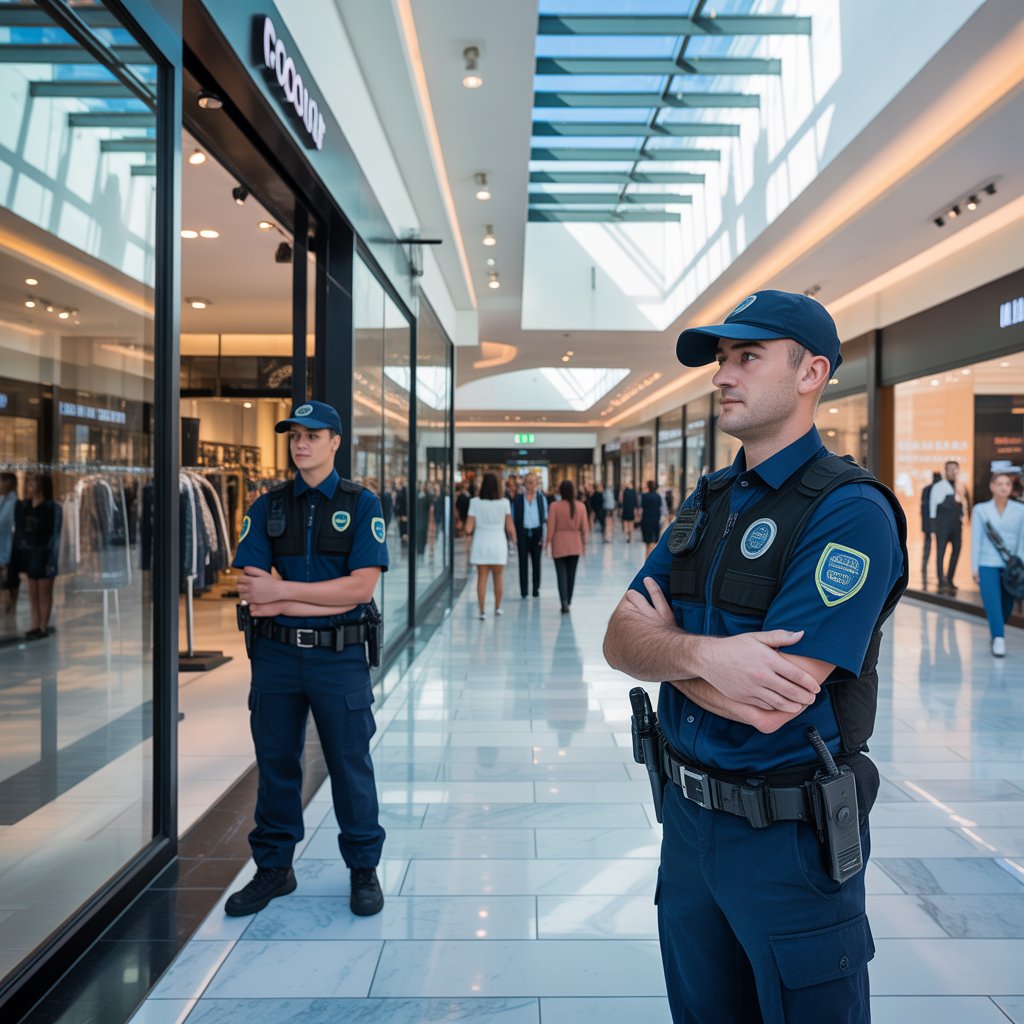
Static security means a guard is placed at one fixed location and stays there. A gatehouse. A reception desk. The front entrance of a building. That guard isn’t walking circuits or bouncing between sites — they’re anchored to one post for the duration of their shift. Anyone approaching that location sees a uniformed officer. That visibility alone changes behaviour.
Mobile security means a guard — or a team in a patrol vehicle — is moving continuously. They cover a route. That route might be one large property like a construction site, or it might be a circuit of a dozen different client locations spread across the northern Gold Coast. The timing can follow a schedule, run randomly, or mix both — deliberately, so that no one can work out a pattern.
Both approaches are legitimate. They just solve different problems.
What Static Security Guards Actually Do
Walk past a building with a static security guard out front and you notice it immediately. There’s someone there. Watching. Someone who will ask a question if you don’t look like you belong.
That’s the foundation of on-site security guards — a visible, consistent, human presence that changes how people behave around a property.
But the role goes well beyond standing at a door. Static security guard services typically cover:
Access control security — checking IDs, verifying credentials, turning away anyone who doesn’t have a clear reason to be there. This is critical for office buildings, industrial facilities, and construction sites where not every person who turns up actually belongs on-site.
Gatehouse security — managing vehicle entry and exit at facilities with boom gates or controlled driveways. Depots, distribution centres, manufacturing plants. The guard at the gate is the first and often only filter between your site and whoever decides to drive through.
Reception security — covering the front desk in a commercial building, handling visitor sign-ins, managing lift access and internal movement. In a lot of corporate environments this overlaps with concierge security, where the guard handles client interactions and front-of-house responsibilities alongside the security role.
Perimeter security — particularly on larger properties where the boundary itself is the vulnerable point. A private school after hours, a Gold Coast resort, a data centre facility. A guard stationed at or walking a perimeter is watching for breach attempts that cameras can miss — and responding in real time if something happens.
Where Static Guards Make the Most Sense on the Gold Coast
High foot traffic. Defined entry points. Environments where face-to-face interaction with the public or staff is a constant daily reality.
A busy retail store on Cavill Avenue needs someone on the floor. Not driving past every few hours — actually there, watching, responding immediately when something happens. Same logic for a licensed venue in Surfers Paradise managing crowd behaviour at the door on a Friday night. Or a corporate building in Bundall where dozens of different companies share a lobby and access needs to be tightly controlled.
FoxWatch Security’s security guard services are structured around exactly these environments — guards who are trained, Queensland-licensed, and matched to the specific demands of whatever site they’re placed on.
Static guarding isn’t about a warm body at a door. It’s about the right person in the right spot, with the authority and training to handle whatever comes through it.
Mobile Security Patrols: Coverage That Doesn’t Stop Moving
The limitation of static security is simple — it protects one place. One post. One gate.
For a lot of Gold Coast businesses, particularly anything with a large footprint, multiple access points, or real after-hours exposure, one post isn’t enough. That’s the gap mobile security patrols fill.
A mobile patrol unit is on the road. All night, in most cases. They cover ground that a single stationed guard never could, and because their timing is either randomised or follows an unpredictable schedule, anyone watching a property has no idea when the next check is coming. That unpredictability is its own deterrent. Opportunistic theft and vandalism — which makes up a significant share of commercial crime on the Gold Coast — happens when people feel confident they won’t be interrupted. Remove that confidence and you remove a large part of the opportunity.
Mobile patrol security services cover a wide range of functions:
Vehicle patrol security — a marked or unmarked patrol car covering a zone or a list of client sites through a shift. The guard checks locks, gates, entry points, lighting, and any flagged vulnerable areas. Every check is logged. Anything unusual is reported immediately.
Foot patrol security — guards walking through buildings, carparks, stairwells, and outdoor areas. Common inside large commercial buildings or shopping centres where a vehicle patrol doesn’t cover the internal spaces.
Alarm response security — when a sensor trips or an alarm activates, a mobile patrol unit responds. Not a monitoring centre calling you at 3 AM asking what you want them to do. An actual officer already working in your area, heading to your site right now.
After-hours security — this is where mobile patrol earns its keep for most commercial clients. Staff leave at 5:30 PM and the premises sits empty until 7 AM. Mobile patrols are the consistent presence making sure that twelve-hour window doesn’t become an open invitation.
Random patrol checks and scheduled patrol checks — most contracts run both. Scheduled checks give clients documented, accountable coverage. Random checks remove the predictability that experienced criminals look for when they’re scoping a site.
Where Mobile Patrols Work Best on the Gold Coast
Construction site security is the most obvious fit. The Gold Coast has been in near-constant development for years — Coomera, Hope Island, Pimpama, the Southport CBD redevelopment — and active sites are targeted regularly. Equipment theft, copper stripping, and after-hours vandalism are all common. A site that’s fenced and locked doesn’t stop someone who’s determined and knows no patrol is coming.
Mobile patrols also make strong sense for:
- Industrial security across the Yatala and Ormeau corridors, where large facilities sit in semi-rural surroundings with limited natural surveillance at night
- Warehouse security across business parks in Molendinar and Nerang
- Residential security in strata communities and gated estates that want documented patrol coverage without the cost of a staffed post around the clock
- Commercial security services covering retail strips, business parks, or clusters of tenancies managed by a single property owner
FoxWatch’s mobile patrol security covers the Gold Coast, Brisbane, and Melbourne — around the clock, with real-time reporting and documented patrol logs shared with clients.
Static Guards vs Mobile Patrols: Side by Side
| Static Security Guards | Mobile Security Patrols | |
| Coverage area | One fixed location | Multiple zones or sites |
| Visible presence | Constant, same spot | Rotating, unpredictable |
| Access control | Strong | Limited to patrol windows |
| After-hours use | Works if fully staffed | Purpose-built for it |
| Alarm response | Fixed to post | Fast — unit already in area |
| Cost across sites | High — one guard per site | Shared across sites |
| Strongest use case | High-traffic entry points | Large perimeters, multi-site |
Neither one wins outright. They answer different questions. The strongest security setups on the Gold Coast use both.
Gold Coast-Specific Security Risks That Aren’t Talked About Enough
Here’s something that’s worth saying clearly — running security on the Gold Coast is not the same as running it in Brisbane or Melbourne. Any security company that doesn’t acknowledge that gap probably doesn’t understand any of the three cities well enough to be trusted with your property.
The Gold Coast runs on tourism. That creates a transient population, high commercial foot traffic year-round, a nighttime economy that keeps certain areas active well past midnight, and retail exposure to opportunistic theft in a way that’s different to most other Queensland cities. The crowds that are good for business are also good for shoplifters working in pairs.
The outer suburbs — Upper Coomera, Ormeau, Pimpama — have a completely different risk profile. More residential, more industrial, less foot traffic through the day. At night, there’s limited natural surveillance and a long stretch of time between any passing presence. That’s where after-hours mobile patrol Gold Coast coverage delivers real value.
Surfers Paradise, Broadbeach, and the beachfront strip bring crowd management challenges, licensed venue security demands, and a late-night environment that requires visible deterrence as much as physical security capability.
And then there’s the construction situation. Almost every suburb on the Gold Coast has an active development site right now — and those sites are targets. Every time. Without consistent patrol coverage, it’s a question of when, not if.
FoxWatch Security’s Gold Coast operations are built around these specific local conditions — not a generic template applied from interstate.
Alarm Response: What Actually Happens at 2 AM
For any commercial premises that closes at night, alarm response security is arguably the single most important security function — and it’s the one businesses most commonly under-invest in.
Here’s what typically happens when an alarm activates at a closed commercial site:
A monitoring centre detects it and calls the owner or a nominated contact. That person, likely asleep, now has to make a decision with no information. They drive there themselves — which takes time, involves risk, and may mean walking into an active break-in — or they call Queensland Police, who categorise commercial alarms without confirmed intrusion as lower priority.
A contracted alarm response security unit through a mobile patrol provider like FoxWatch is a different outcome entirely. A patrol officer already on the road in your area turns around and attends. They check the site, secure any open access points, document everything, and send you a report. You get a phone call that says the situation is handled — not one that asks you what to do about it.
For asset protection and property protection in commercial and industrial settings, this capability changes the risk equation significantly.
How Different Gold Coast Business Types Should Think About This
Retail Businesses
A static security guard inside a retail store during trading hours is the clearest possible deterrent. Anyone considering shoplifting or causing a disturbance sees the uniform and recalibrates.
After hours, mobile patrol security services cover the carpark and exterior entry points as part of a broader patrol route. FoxWatch’s retail security deploys trained guards who understand loss prevention and can handle the specific demands of high-traffic retail environments across the Gold Coast’s major shopping strips.
Warehouses and Industrial Facilities
For large properties in Yatala, Ormeau, or the southern Gold Coast corridor, a hybrid model is standard — a static guard at the primary vehicle entry point managing access during operational hours, combined with mobile patrol coverage of the perimeter and loading dock areas overnight.
The shift handover window and late-night delivery periods are consistently the highest-risk points in any warehouse operation. A security plan that doesn’t address those specifically is missing the target. FoxWatch’s industrial security services cover exactly these gaps, with guards trained for the specific hazards and access control requirements of industrial sites.
Construction Sites
Almost always mobile patrol. The perimeter shifts as the build progresses, access points change, and the site looks different from one week to the next. A static guard at a front gate doesn’t cover a site that has eight different ways to walk in.
Overnight mobile patrols cover the full perimeter, respond to any alarm activations, and create a documented record that the site was checked. For higher-value projects or phases where expensive equipment is on-site, the patrol frequency increases to match the risk.
Corporate Offices and Commercial Buildings
Corporate security typically needs both — a static presence at the front of house during business hours and mobile patrol coverage of carparks, external areas, and building perimeters after hours.
Reception security or concierge security handles daytime access control in the lobby. The evening mobile circuit handles everything else. For clients who need a full security risk assessment before building a plan, that conversation starts with an honest site evaluation rather than a canned recommendation.
Residential Communities
Concierge security or gatehouse security for higher-end developments. Mobile patrols for strata communities that want consistent, documented patrol coverage without committing to full-time staffed posts. Property security services for residential environments are as much about resident reassurance and peace of mind as they are about incident prevention — both are valid goals.
Events
The Gold Coast events calendar is year-round and substantial. Corporate conferences, outdoor festivals, markets, venue functions. FoxWatch’s event protection services deploy static posts at key entry and exit points alongside mobile patrol units covering the full event footprint — controlled access at the perimeter, incident response capability across the rest.
Security Guards Gold Coast, Brisbane, and Melbourne: Does Location Change Anything?
It does. Not in terms of licensing or professional standards — those are consistent across Australia — but in terms of what the work actually looks like day to day.
Security guards Gold Coast operate in a tourism-heavy, development-heavy environment with a significant nighttime economy and coastal geography that creates some unusual access control challenges. The patrol routes, the risk windows, the types of incidents that occur most frequently — all of it is shaped by the Gold Coast’s particular character.
Security guards Brisbane work a city with a strong industrial base in its southern and western corridors, significant retail theft pressure in the CBD and inner south, and a growing event venue market that requires dedicated security planning.
Security guards Melbourne navigate high urban density, organised retail crime in the CBD, and large corporate clients in tightly packed commercial precincts where response times are measured in minutes.
Mobile patrol Brisbane, mobile patrol Melbourne, and mobile patrol Gold Coast operations all run from local bases, with local teams who know the roads, the risk areas, and the clients.
FoxWatch has ground presence in all three cities. The infrastructure is shared, but the local knowledge isn’t interchangeable — and that matters.
Choosing a Private Security Company: What Actually Separates Good From Average
The decision between static and mobile security is important. The decision about who provides it is more important.
Licensing — every security officer in Queensland must hold a current licence under the Security Providers Act 1993. This isn’t optional. Licensed security guards have passed background checks, completed required training, and are subject to ongoing compliance. Any private security company that can’t immediately confirm their guards are licensed and current is not a company worth hiring.
Experience that fits the role — a licensed guard doesn’t automatically know how to run access control at a construction site, manage a corporate concierge role, or handle a crowd at a late-night venue. The experience has to match the deployment. Five years in the industry matters. Five years in the relevant type of environment matters more.
Documentation — you should be able to confirm that patrols happened. When they happened. What was observed. What was done. If a security company can’t provide clear patrol logs and incident reports, you have no way of knowing whether the service you’re paying for is actually being delivered.
Real response times — ask directly, and ask specifically. How many sites does each mobile patrol vehicle cover? What’s the committed response time to an alarm activation? A patrol spread across too many sites doesn’t provide rapid response security — it provides the appearance of coverage while leaving gaps in the actual delivery.
Local presence — a company that genuinely covers the Gold Coast will have local vehicles, local staff, and genuine knowledge of the patrol zones. Response times that are fast in theory but slow in practice because the nearest unit was actually in Logan aren’t acceptable.
FoxWatch employs guards with five or more years of verified experience and full Queensland licensing. No exceptions. Contact FoxWatch for a free site assessment — a real one, not a sales call.
Custom Security Solutions: Why the Cookie-Cutter Approach Fails
The Gold Coast isn’t one environment. It’s a collection of distinct commercial, industrial, and residential zones, each with its own operating rhythm and risk profile. A security solution designed generically — the same static guard contract or the same patrol circuit sold to every client regardless of what the site actually needs — is not a security solution. It’s a liability.
A custom security solutions approach starts with a proper security risk assessment. Not a checklist. An actual evaluation of your property — the layout, the access points, the operational hours, the historical incident data, the specific vulnerabilities that are unique to your site and your location.
For some Gold Coast businesses, that assessment leads to a 24/7 security services contract combining a static guard presence during business hours and mobile patrol coverage overnight. For others, a targeted after-hours patrol contract with alarm response is enough. For others, a static guard three days a week during peak periods and mobile patrol the rest of the time is the practical answer that fits the budget without leaving the property exposed.
The recommendation should come from an honest evaluation of the site — not from whatever contract size is easiest to fill.
The Bottom Line
Static vs mobile security doesn’t have a single right answer. It has the right answer for your specific site, your specific risk profile, and your specific operational needs.
Static security guards are right for fixed entry points, high foot traffic, access control environments, and any situation where a constant, authoritative on-site presence is the primary need.
Mobile security patrols are right for large perimeters, multiple sites, after-hours coverage, alarm response, and anywhere that needs wide coverage at a cost that works for the business.
Most well-protected Gold Coast businesses use both. Not because it’s the most expensive option — but because real sites rarely fit neatly into one category, and the risks that matter most often show up in the gaps between what a single approach covers.
If you want a straight conversation about what your property actually needs, FoxWatch Security is available around the clock. No hard sell. An honest assessment, a recommendation that fits your site, and a team that knows the Gold Coast because they work here.
Frequently Asked Questions
Q1: What is the difference between static and mobile security?
Static guards are fixed at one post — a gate, lobby, or entry. Mobile patrols move across sites or zones continuously, covering wide areas and responding to alarms fast.
Q2: Which is better for a Gold Coast retail business — static guard or mobile patrol?
Static guards on the floor work best during trading hours. Mobile patrols cover carparks and exteriors after hours. Most Gold Coast retailers benefit from using both together.
Q3: Are mobile patrols more cost-effective than static guards for after-hours coverage?
Generally yes — patrol costs are shared across multiple sites. For a single commercial property after hours, mobile patrol is usually the more affordable and practical option.
Q4: Are FoxWatch security guards licensed in Queensland?
Yes. Every guard holds a current Queensland licence under the Security Providers Act 1993. Licensing compliance is verified before any guard is placed on any site.
Q5: Can FoxWatch provide both static guards and mobile patrols for the same property?
Yes. Most FoxWatch contracts for commercial and industrial Gold Coast sites combine both — static coverage during business hours and mobile patrol after hours, tailored to the property.
FoxWatch Security | Office 2, No 9 Bay Street, Southport QLD 4215 Phone: 0402 598 548 | Email: [email protected] Gold Coast · Brisbane · Melbourne — Licensed, Local, 24/7
Comments are closed