
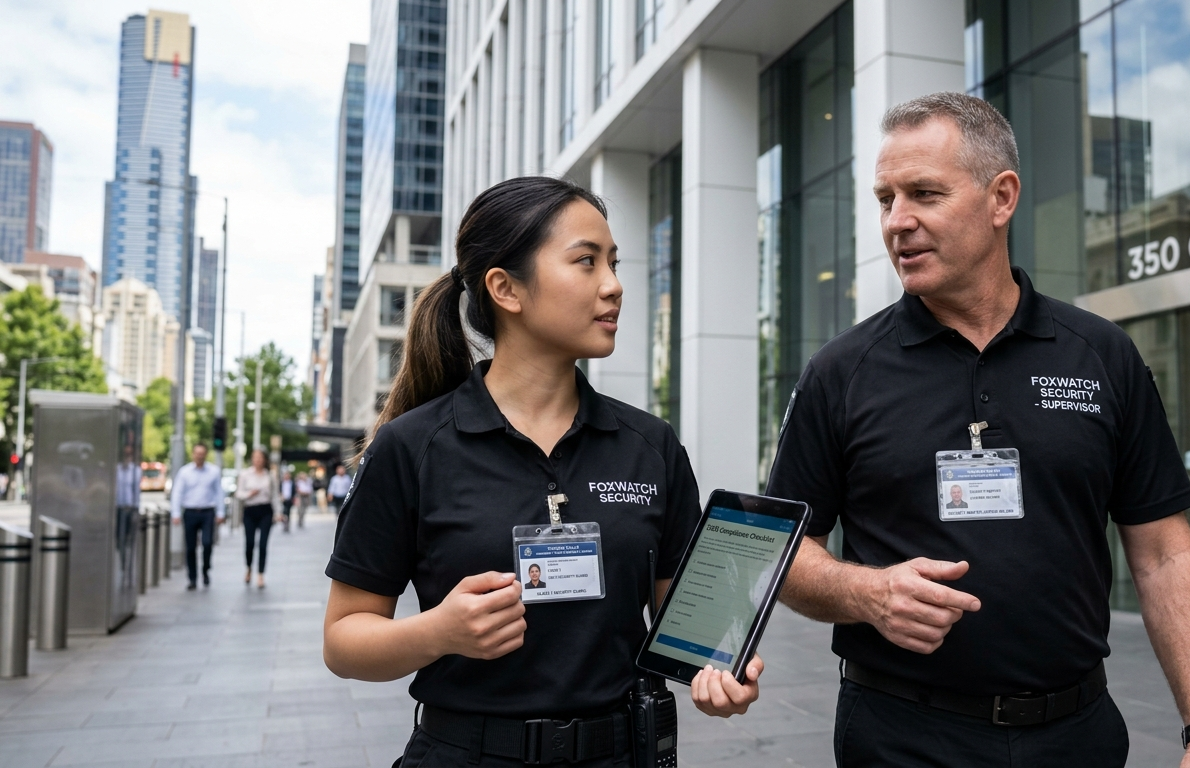
2026 Security Licensing Guide for Australian Employers
If there’s one phrase every hiring manager in this industry should have bookmarked right now, it’s security licensing guide 2026. The rules haven’t sat still, and honestly, most of the confusion we hear from clients on the Gold Coast, in Brisbane, or down in Melbourne comes down to the same thing: nobody told them the goalposts had shifted. One missing licence, one lapsed renewal, and you’re not just risking a fine — you could be looking at a stop-work notice or a cancelled contract, sometimes over something as small as a paperwork gap you didn’t even know existed.
So this guide is our attempt to cut through that. Not a wall of legal text, just what employers actually need to know about master licences, individual guard licences, background checks, and the state-by-state differences that catch people out every year.
Why Employers Can’t Just Leave Licensing to Someone Else
A lot of business owners assume that once they hire a security company, the licensing headache belongs to that company and nobody else. Fair enough — that’s true if you’re outsourcing entirely. But if you’re running an in-house security team, say for a retail chain, a venue, or an events business, that compliance sits with you. Full stop. Get it wrong and you’re the one answering to a regulator, not some subcontractor three steps removed.
We’ve also noticed enforcement has genuinely tightened over the last couple of years. More spot checks at events, more attention on construction sites and retail precincts. An unlicensed guard on your books isn’t just a technical breach either — if something goes wrong on a shift and your insurer discovers that person wasn’t legally allowed to be working, that’s a whole different problem.
Security License Requirements Australia: The Basics Nobody Explains Well
Security license requirements Australia-wide follow roughly the same shape, even though every state runs its own system and its own paperwork. There are really two layers to keep straight:
A business or master licence, held by the company (or sole trader) providing the security service. And an individual licence, held by every guard, crowd controller, or officer actually doing the work on the ground.
Both need to be current before anyone starts a shift. It doesn’t matter how spotless one licence is if the other has lapsed — you’re operating illegally either way.
What Actually Counts as Licensable Work
Most states cast a fairly wide net over what counts as “security industry” activity. This usually includes static guarding and property patrols, crowd control and bag checks at venues, mobile patrol and alarm response callouts, cash-in-transit handling, bodyguard or close protection duties, and installing or monitoring security equipment — which is often its own technical licence class entirely.
If your team touches any of that, they need to be licensed for it. Full-time, casual, contracted — doesn’t matter.
Australian Security Employer Compliance: What’s Actually on You
Australian security employer compliance goes well beyond glancing at a licence card during induction and moving on. In practice, employers are expected to verify every licence before that person’s first shift (not after — before), keep proper records of licence numbers and expiry dates for the whole team, and check in on those records periodically, because licences can be suspended or cancelled mid-term without much warning. You also need the right master licence class for the actual size and scope of what you’re doing, and if anything changes at the company level — directors, trading names, structure — most regulators want to know.
The good news is most state regulators now run free online registers, so checking someone’s licence status takes about thirty seconds. There’s really no excuse for skipping that step anymore.
Security Master License Requirements: State by State
Security master license requirements differ enough between states that any employer working nationally really does need to check each one separately. Assuming they’re all the same is where most of the trouble starts.
Queensland
Security firms need a security firm licence through the Office of Fair Trading, and every individual doing licensable work needs a personal licence in the right class — Class 1 for guarding, crowd control, or bodyguard work, Class 2 for consulting, training, or technical roles. Individual applicants go through fingerprinting and a criminal history check, and the whole process can take four to six weeks. If you’re onboarding for a new contract, build that lead time in — don’t leave it to the last fortnight.
Victoria
Victoria requires a private security business licence for any company or individual providing security services commercially, and workers need their own individual registration matched to the actual role — crowd controller, guard, bodyguard, whatever applies. Renewals and probity checks run through Victoria Police, and it’s on the employer to make sure each person’s registered category actually matches what they’re being rostered to do.
New South Wales
NSW runs a master licence system for security businesses, layered with Class 1 and Class 2 individual licences depending on the work — guarding and crowd control under Class 1, consulting and technical work under Class 2. There’s also been more scrutiny lately around firearms-related security roles in NSW, so armed positions carry extra conditions worth checking before you assume a licence covers it.
If You Operate in More Than One State
Don’t assume a licence in one state just transfers to another — it doesn’t work that way. Mutual recognition pathways exist for individuals moving between states, but the paperwork still has to be lodged and approved before that person can legally work a shift in the new jurisdiction. Businesses that skip this step usually find out the hard way, during an audit, that they’ve been operating a gap they didn’t know was there.
Security Guard Licensing Regulations That Follow the Guard to Site
Security guard licensing regulations don’t stop once someone’s hired — they follow the guard onto site, every shift. A few things worth building into your standard procedure: the licence generally needs to be carried on the person during work hours, uniform and ID requirements vary depending on the activity (crowd control especially has its own rules in most states), and weapons or equipment use is strictly tied to licence category — a guard licensed for unarmed duties simply cannot be put on an armed or cash-in-transit role, no matter how experienced they are. Some licence classes also require ongoing refresher training to stay valid, not just a one-off course when they first applied.
Getting this into your rostering system or onboarding checklist saves you from finding out mid-shift that something’s out of date — which is a genuinely bad way to find out.
Private Security Business Licence: Doing the Setup Properly the First Time
A private security business licence is the foundation everything else sits on, so it’s worth getting the application right the first time rather than watching it bounce back and lose you weeks. Regulators generally want proof of business structure, whether that’s a company, partnership, or sole trader; probity checks on directors and anyone with management control; adequate insurance, including public liability; a clean history for people running the business; and in some states, evidence of financial standing.
Applications that get sent back for more detail are almost always missing one of these. And if you’re planning to bid for government, retail, or event contracts down the track, check what the client expects on top of the regulatory minimum — a lot of corporate and government tenders ask for more than the baseline.
Mistakes We See Cost Employers Real Money
Rostering a guard whose licence has quietly lapsed happens more often than people admit — usually because a renewal reminder got buried in someone’s inbox. Mismatched licence class and duty is another one: putting an unarmed guard on a cash-in-transit run, for instance, breaches the licensing conditions even if that guard is your most experienced person on the floor. Assuming a subcontractor’s compliance is automatically sorted is a risky habit too — always ask to see their master licence and their workers’ individual licences before the contract starts, not after. And ignoring state-specific renewal timing catches people out; some states send notices weeks ahead, but if your contact details on file are out of date, that notice never arrives.
How FoxWatch Security Handles This on Our End
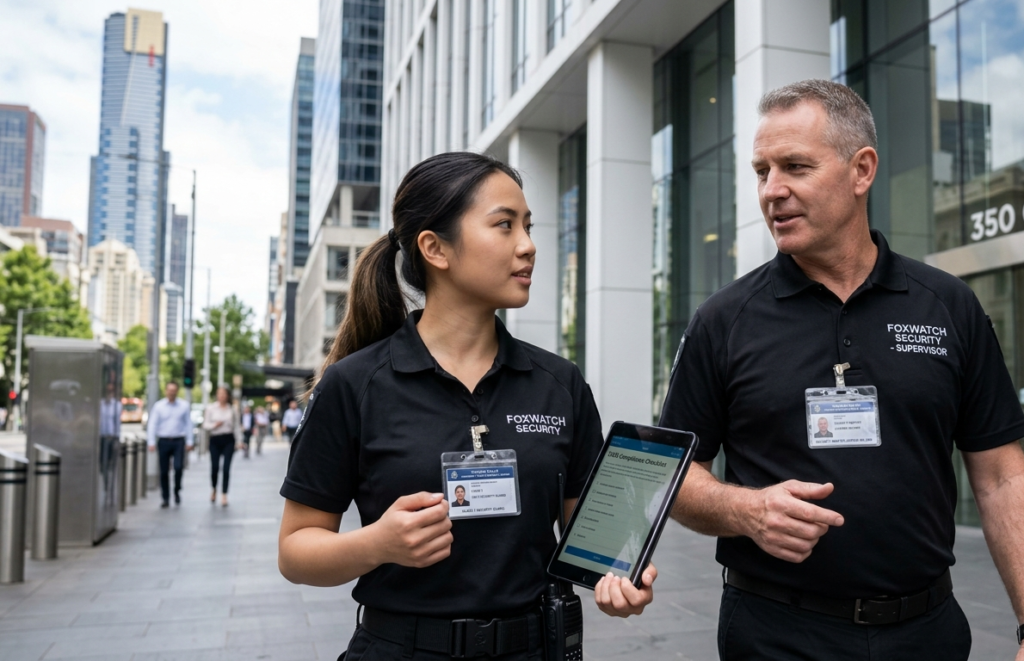
Every guard we place across Melbourne, Brisbane, and the Gold Coast holds a current, verified licence that matches the exact job they’re doing on site — whether that’s static guarding, mobile patrol, alarm response, or cash in transit work. We track renewal dates ourselves, so clients across corporate, retail, and event security don’t end up inheriting a gap that isn’t theirs to begin with. Our current credentials are listed on our licenses and certifications page if you’d like to see them directly.
If you run an in-house team and just want someone to sanity-check your licensing setup, our team’s happy to talk through what a compliant roster should actually look like for your industry — whether that’s a commercial site, a healthcare facility, or an education setting.
Where This Is Heading in 2026
The pattern is fairly obvious at this point — more digital verification, faster spot checks, and less patience for “we’ll sort the paperwork later.” The employers who build licensing checks into everyday operations, not just onboarding day, are the ones who won’t get caught flat-footed when a regulator, insurer, or client asks to see the records.
If you’re reviewing your team’s compliance right now, or you need licensed guards you can actually rely on across Queensland or Victoria, get in touch with FoxWatch Security and we’ll talk you through what’s required for your sites.
Frequently Asked Questions
Do all security guards in Australia need an individual licence?
Yes. Anyone doing guarding, patrol, or crowd control work needs a personal state licence, no matter their hours or employment type.
What’s the difference between a master licence and an individual licence?
A master licence covers the business providing security services. An individual licence covers each person actually performing the work.
Can a security licence from one state be used in another?
Not automatically. Mutual recognition exists, but the person still needs approval before working in the new state.
How long does a Queensland security licence application take?
Usually four to six weeks, longer if paperwork or fees are missing, so apply well before your intended start date.
What happens if an employer rosters an unlicensed guard?
They risk regulatory penalties, losing the contract, and greater liability exposure if something goes wrong during that shift.
Comments are closed