
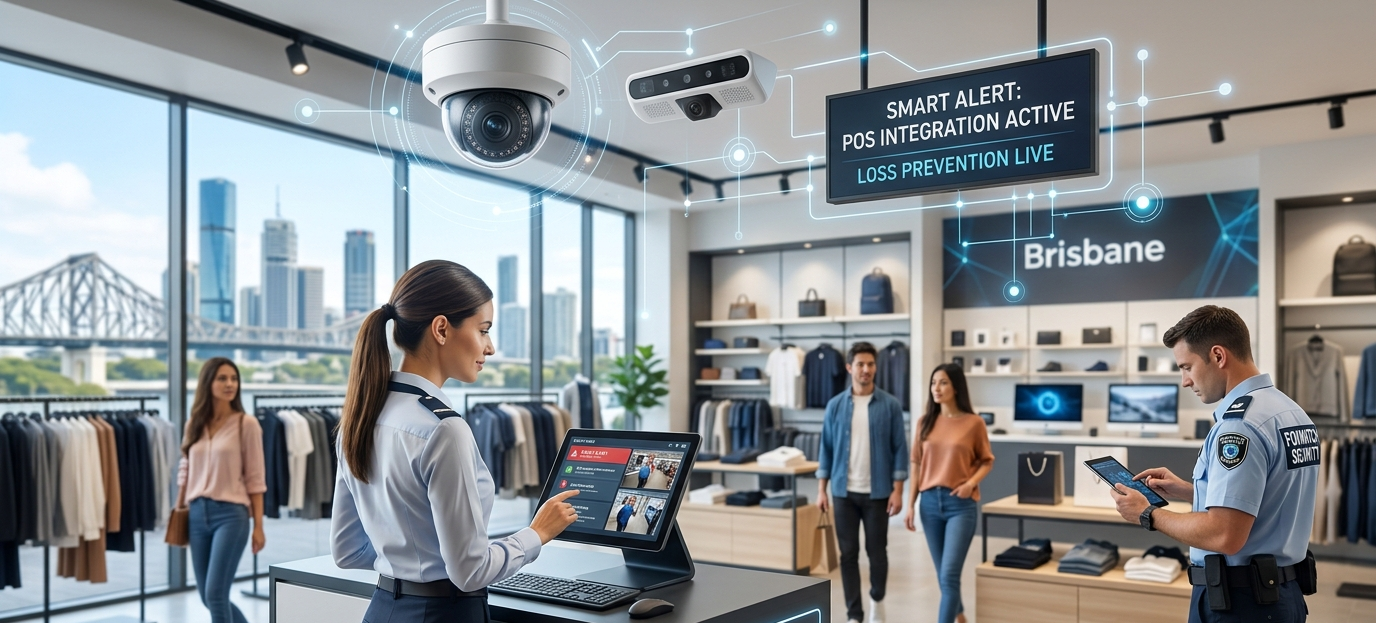
Retail Loss Prevention Brisbane has stopped being a back-office worry and turned into a daily operating cost for store owners across the city. Walk into any shop along Queen Street Mall, Fortitude Valley or out at Chermside and ask the manager what keeps them up at night. Nine times out of ten, it isn’t rent or staffing. It’s stock walking out the door.
And honestly? The numbers back them up. Theft across Australia hit a 21-year high in 2024, with roughly 595,660 recorded victims, and retail premises now make up close to 45% of all recorded theft locations — up from about 31% just over a decade ago. That’s not a blip. That’s a shift in where crime is happening, and Brisbane stores are squarely in the firing line.
So this guide is the practical version. No fluff, no scary statistics for the sake of it. Just what’s actually changing in 2026, and what you can do about it on a shop floor in South East Queensland.
Why Retail Loss Prevention Brisbane Matters More in 2026
Here’s the thing most owners underestimate: it’s rarely one big theft that sinks the margin. It’s the slow bleed. A few items here, a self-checkout “miss” there, a refund that wasn’t quite legitimate. Add it up over a year and shrinkage can quietly eat into 3–4% of turnover. For a small independent on a tight margin, that’s the difference between a good year and a brutal one.
Brisbane has its own flavour of the problem. We’ve got high-footfall precincts like the Valley and the CBD where opportunistic theft thrives in the crowd, suburban centres like Indooroopilly and Carindale where organised groups target electronics and cosmetics, and strip shops in places like West End and Paddington that get hit after hours. One retail loss prevention plan does not fit all of them — and that’s exactly the mistake too many stores make.
If you want the full picture of how on-site protection fits your store type, our retail security services page breaks down the coverage options by environment.
Retail Theft Trends 2026 Every Brisbane Store Should Watch
Let me tell you where the retail theft trends 2026 are actually heading, because some of this has changed fast.
Organised retail crime (ORC) is now the big one. Forget the image of a single teenager pocketing a chocolate bar. We’re talking coordinated teams — people who scout a store, work in pairs to distract staff, and target specific high-resale goods. Electronics, designer fashion, fragrance, vitamins, and baby formula are favourites because they move quickly online.
Self-checkout has opened a door. It’s convenient, sure, but it’s created a whole new lane for “accidental” non-scanning. Stores that leaned hard into self-service without rethinking floor coverage are paying for it now.
Aggression toward staff is rising. This is the trend nobody likes to talk about. When a team member challenges a thief, confrontations are escalating. Queensland’s Jack’s Law — now permanent — gives police stronger powers to act on this, but on the floor your staff still need a clear, safe protocol. Their safety always comes before stock. Always.
Smash-and-grab on high-value retail has climbed sharply across the country, particularly for electronics and jewellery. After-hours protection is no longer optional for those categories.
How to Prevent Shoplifting in Stores: The Brisbane Playbook
Alright, the part you came for. Here’s how to prevent shoplifting in stores without turning your shop into a fortress that scares off honest customers.
1. Fix your store layout first
Theft loves blind spots. Walk your floor and look for them honestly — tall shelving that hides sightlines, a back corner no one can see from the counter, an exit that’s too far from staff. Keep high-theft, high-value items near the register or in locked displays. Clear sightlines from the till to the door do more than any gadget.
2. Make your presence felt
A genuine human deterrent works. Greet every person who walks in — not in a suspicious way, just a warm “morning, let me know if you need a hand.” Thieves want anonymity. Acknowledgement removes it. For higher-risk stores, a visible guard at the entrance is one of the strongest shoplifting deterrents for Brisbane retailers there is. We cover this directly through our security guards in Brisbane.
3. Use technology that produces evidence, not just footage
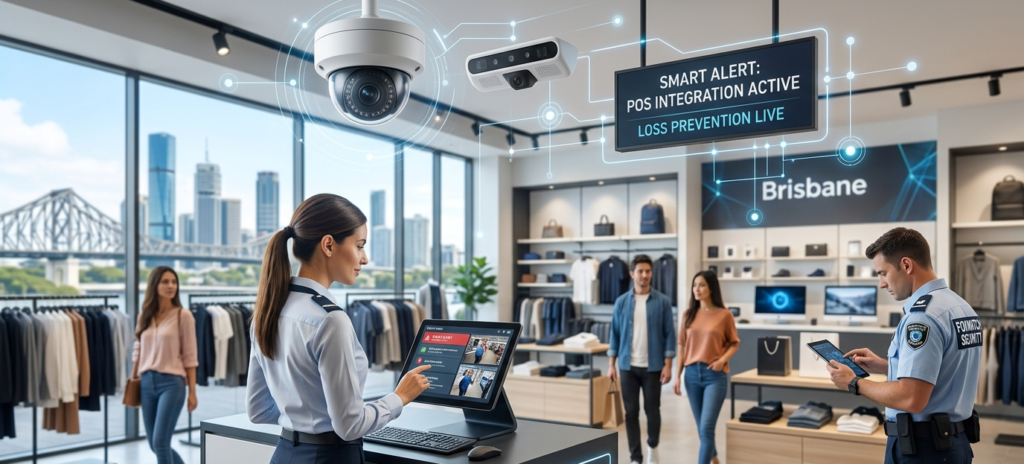
Plenty of Brisbane stores have CCTV. Far fewer have useful CCTV. A camera that only captures hats and shoulders is worthless in a prosecution. You want an identification camera at the entrance capturing clear faces, plus overview cameras across the floor. Good commercial security systems Brisbane stores rely on are built around answering one question: who, exactly, and what did they take?
4. Train your team to observe, not chase
Teach staff to spot the patterns — someone watching the staff more than the products, bulky clothing in summer, working in pairs, repeated visits without buying. And teach them the hard line clearly: in Queensland, retail staff and security can’t lawfully detain or search a person. They observe, they document, they call police. Nobody plays hero.
5. Lock down the after-hours risk
Daytime theft gets the attention, but break-ins do the expensive damage. Monitored alarms paired with a rapid response close that gap. Our alarm response team is built for exactly that overnight window when your store is empty and exposed.
Brisbane Retail Security Solutions That Actually Work Together
The stores that win at this don’t pick one tactic. They layer. The best Brisbane retail security solutions combine a visible human presence, smart cameras, monitored alarms, and roaming patrols into a single system where each part covers the others’ weak spots.
A guard at the door deters the opportunist. Cameras build the case against the organised crew. Alarms and mobile patrols catch the after-hours threat. And for retailers running multiple sites or larger formats, integrated commercial security services tie the whole thing into one coordinated response rather than four disconnected ones.
That’s the real shift in retail loss prevention strategies for 2026 — moving from reactive (reviewing footage after the loss) to proactive (stopping it at the door). It costs less in the long run, too. Recovering stolen stock is rare. Preventing the theft is the only reliable return.
Know the Local Rules Before You Act
Quick but important. In Queensland, shoplifting of goods valued at $150 or less is handled as a regulatory offence — usually a fine. Above $150, it can be charged as stealing under the Criminal Code, carrying far heavier penalties. That matters for how you document incidents and what you hand to police. Clean CCTV, an accurate value of goods, and a written staff statement make the difference between a charge that sticks and one that doesn’t.
Where FoxWatch Fits In
We’ve spent close to a decade protecting retail, hospitality and commercial sites across Brisbane, the Gold Coast and Melbourne. Our retail officers aren’t generic guards — they’re trained specifically in loss prevention, suspicious-behaviour identification, evidence preservation, and lawful, calm intervention that doesn’t drive your honest customers away.
If retail theft is hurting your bottom line, the smartest first step is a proper risk walkthrough of your store. See our full Brisbane coverage, or just get in touch and we’ll talk through what your specific store actually needs. No template. No upsell. Just a plan that fits your floor.
Frequently Asked Questions
What is retail loss prevention in Brisbane?
It’s the mix of guards, CCTV, alarms and staff training used by Brisbane stores to reduce shoplifting, internal theft, fraud and stock loss.
How can Brisbane retailers prevent shoplifting?
Keep clear sightlines, greet every customer, place a visible guard at entry, use identification cameras, and train staff to observe and report — never detain.
Are retail theft trends 2026 really getting worse?
Yes. Australian theft hit a 21-year high, organised retail crime is rising, and retail sites now make up nearly half of all recorded theft locations.
Can a store guard detain a shoplifter in Queensland?
No. Retail staff and guards can’t lawfully detain or search someone. They observe, document, preserve CCTV evidence and contact Queensland Police.
What’s the best retail security solution for a small store?
A layered setup: a monitored alarm, well-placed cameras, trained staff, and scheduled patrols or a guard during your highest-risk trading hours.
Comments are closed