
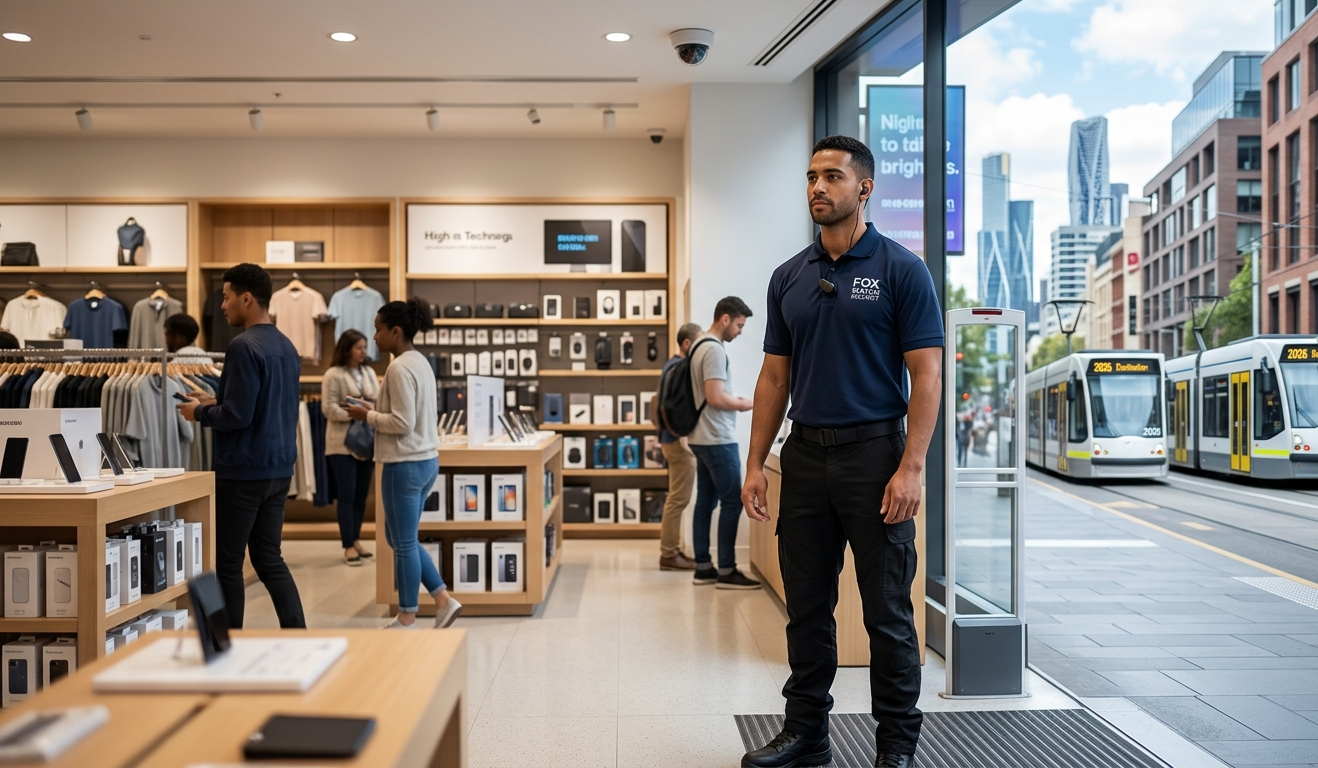
How to Stop Shoplifting in 2026: Melbourne Retail Loss Prevention
Talk to any retailer in Melbourne right now and theft comes up within five minutes. Not because they’re paranoid. Because the numbers don’t lie. Loss prevention officers Melbourne stores bring on board aren’t a luxury add-on anymore — they’re quickly becoming the line item that decides whether a shop turns a profit or quietly bleeds stock all year.
We’ve walked into stores on Chapel Street with cameras pointed at the wrong shelf. We’ve seen homeware shops in Chadstone lose more to refund fraud than to actual shoplifting. And we’ve had owners along Bourke Street Mall tell us, almost sheepishly, that they only noticed the problem when the end-of-year stocktake didn’t add up. So let’s get into what’s actually going on, and what a properly trained loss prevention officer in Melbourne does differently from a guard who’s just there to look the part.
Why Melbourne Retail Stores Are Feeling It More in 2026
Shoplifting used to be opportunistic. A jacket slipped under an arm during a quiet Tuesday afternoon. That’s not really the picture anymore.
What’s changed is scale and coordination. Melbourne retail stores are dealing with organised groups moving between shopping strips in a single afternoon, self-checkout abuse that staff barely notice, and refund fraud that looks completely legitimate on paper. Centres like Highpoint and Southland feel this constantly, but so do the small independent stores in the CBD that don’t have a fraction of the security budget a major chain does.
Here’s the part owners hate hearing: shrinkage rarely announces itself. It shows up slowly, in margins that shrink a percentage point at a time, until a stocktake forces the conversation nobody wanted to have. That’s the entire argument for proactive retail asset protection instead of dealing with theft after it’s already happened.
What’s Actually Driving Melbourne CBD Retail Crime
A few patterns keep coming up when we look at what’s happening on the ground:
- Foot traffic in the CBD bounced back hard, and busier stores mean more blind spots for a stretched-thin staff team.
- Melbourne CBD retail crime increasingly involves repeat faces hitting the same strip of stores within hours of each other.
- Late trading and weekend laneway crowds make it almost impossible for two or three staff to watch every corner.
- Click-and-collect counters and self-serve checkouts created theft opportunities that simply didn’t exist five years ago.
None of this means Melbourne retail is a lost cause. It means the security approach that worked in 2019 isn’t built for 2026.
What Does a Loss Prevention Officer in Melbourne Actually Do?
This is where a lot of owners get the wrong picture. A loss prevention officer isn’t a guard parked near the door for show. The role is built around stopping theft before it happens, not writing it up afterwards.
A trained officer will generally:
- Read customer behaviour for the signs that suggest intent to steal, without making honest shoppers feel like suspects.
- Work alongside CCTV and EAS (electronic article surveillance) tags so alerts get acted on instead of ignored.
- Walk the floor discreetly, paying closer attention to fitting rooms, exits, and the shelves carrying your highest-margin stock.
- Document incidents the right way, so the evidence actually holds up if police or your insurer get involved later.
- Pass on simple habits to your retail staff — small things they can use during a normal shift without it feeling forced.
That’s the real difference between general site security and dedicated retail asset protection. One looks after the building. The other looks after the stock, the till, and the people working the floor.
Shoplifting Deterrence Strategies Worth Actually Using in 2026
If you’re building a plan for your own store, these shoplifting deterrence strategies hold up across pretty much every Melbourne retail environment we’ve worked with, big or small.
Visible deterrence at the entry
A staffed entrance, decent signage, and cameras people can actually see do more of the heavy lifting than most owners expect. Shoplifters look for the easiest target in the strip, not the toughest one.
Layout that removes hiding spots
Open sightlines, a mirror in that one blind corner, decent lighting down the back aisle. It’s the cheapest fix on this list and the one almost everyone skips.
Staff who actually greet people
A genuine “hey, let us know if you need anything” puts off opportunistic theft more than people give it credit for. It tells a customer they’ve been noticed — and noticed is the opposite of an easy target.
EAS tagging on the stock that matters
Tags on your higher-value items only work if whoever’s on the floor knows how to respond to the alarm calmly and correctly. Without that, it’s just noise.
A dedicated loss prevention officer on the roster
For stores with stubborn shrinkage, this is the move that pays for itself the fastest. A retail security specialist on the floor changes behaviour within the first shift, often before they’ve even spoken to a customer.
Retail Shoplifting Solutions: It’s Not Tech vs People
A mistake we see constantly — owners trying to choose between technology and a human presence, when the strongest retail shoplifting solutions use both together. Cameras record what happened. People stop it from happening in the first place. CCTV is brilliant for an investigation after the fact. It does almost nothing in the actual moment.
The setups that work best usually combine:
- CCTV and EAS for coverage and a paper trail
- A trained loss prevention officer for active deterrence on the floor
- Mobile patrol coverage once the doors are locked and stock is sitting unattended overnight
- Staff who’ve actually been shown how to spot and report suspicious behaviour early, not just told to “keep an eye out”
That layering is the difference between a store that occasionally catches someone and a store that mostly stops the attempt before it starts.
Victoria Retail Security Regulations Owners Should Actually Know
Before you bring anyone on, it’s worth knowing the legal side, because this trips up more owners than you’d think. Victoria retail security regulations require every security and loss prevention worker to hold a current licence through Victoria Police under the Private Security Act. That licence covers exactly what an officer can and can’t do when they’re dealing with a suspected shoplifter.
A few things worth keeping in mind:
- Only a licensed officer can legally ask someone to remain on-site while police are called.
- Physical detention is tightly restricted — which is exactly why proper training matters so much here.
- Evidence has to be collected the right way, or it’s at risk of being useless later.
- Unlicensed staff should never attempt to physically step in, no matter how confident they feel in the moment.
Get this part wrong and the legal exposure can cost you far more than the original theft ever would have.
Local Retail Business Security Beats a Generic National Package, Every Time
Every retail strip in Melbourne runs on its own rhythm. Different foot traffic, different risk windows, different layout problems entirely. That’s exactly why local retail business security consistently outperforms whatever generic package gets sold to stores from Perth to Cairns under one template.
A provider who actually knows Melbourne’s retail precincts — the CBD laneways, the outer suburban big-box stores, the seasonal crush around AFL finals or Boxing Day — builds a plan around your store specifically. Being based locally matters here too. FoxWatch Security can respond faster, understands how crime patterns shift around major events and holiday trading, and can adjust coverage within days if your shrinkage numbers move in the wrong direction.
How to Hire Loss Prevention Officers Without Wasting Your Budget
If you’re ready to bring in proper support, here’s roughly how it should go:
- Start with a site assessment. A real walkthrough finds your actual risk areas — not the ones you’ve just assumed for years.
- Confirm licensing before anything else. Always check officers are licensed correctly under Victoria’s security regulations.
- Roster around your worst hours, not your average ones. Weekend afternoons and late trading usually carry most of the risk.
- Ask what reporting actually looks like. You want a written incident report, not a quick chat at the end of a shift.
- Trial it before committing. A short-term arrangement lets you watch the shrinkage numbers move before signing anything longer.
Most owners who hire loss prevention officers notice a difference within the first month — mainly because a consistent presence changes behaviour almost immediately, often before a single incident even happens.
Protecting Your Store Starts With the Right Team on the Floor
Shoplifting isn’t disappearing in 2026, but it’s manageable with the right people, sensible deterrence, and a provider who actually understands how Melbourne retail operates day to day. Whether you’re running one boutique or coordinating security guards across several sites, the goal stays the same — stop the loss before it happens, instead of cleaning up after it.
If your store’s been dealing with rising shrinkage, or you just want a tighter plan before the next busy season hits, get in touch with our team for a tailored loss prevention assessment.
FAQs
How much does it cost to hire loss prevention officers in Melbourne?
Costs vary with hours, risk level, and store size, but rates are similar to standard guard pricing, with a custom quote after a free site assessment.
What’s the difference between a loss prevention officer and a security guard?
Loss prevention officers focus on theft detection and evidence, while general guards handle broader site safety, access control, and patrols.
Are loss prevention officers legally required to be licensed in Victoria?
Yes. Under Victoria retail security regulations, every officer must hold a valid security licence issued by Victoria Police before working in stores.
Can a loss prevention officer physically detain a shoplifter?
They can request a suspected shoplifter remain for police, but physical detention is legally limited, so officers rely on de-escalation and procedure.
How fast can FoxWatch Security place an officer in my store?
After a quick assessment, FoxWatch Security can usually deploy a trained officer within a few business days, depending on shift needs and availability.
Comments are closed