
Corporate Risk Evaluation: When to Hire an AU Security Partner
A corporate risk evaluation Australia businesses actually use isn’t a once-a-year tick-box exercise. It’s the thing that tells you, in plain numbers, whether your office, warehouse, retail floor or worksite is one bad afternoon away from a serious incident. Most business owners only think about security after something has already gone wrong — a break-in, a staff member threatened at the front desk, cash gone missing on a Friday night. By then, you’re reacting, not managing.
This guide walks through what a proper corporate risk evaluation actually looks like, the signs that tell you it’s time to stop handling security in-house, and how outsourcing corporate security to a licensed AU provider changes the equation. We’ll also cover the checklist most Australian risk assessors work from, so you can run a basic version yourself before picking up the phone.
What a Corporate Risk Evaluation Australia Business Needs Actually Covers
A genuine business security risk assessment australia companies rely on looks at four things together, not in isolation:
- Physical vulnerabilities — entry points, blind spots, lighting, fencing, loading docks
- People risk — staff after-hours exposure, cash handling, aggressive visitors, lone workers
- Asset exposure — stock, equipment, data rooms, vehicles, cash on premises
- Response readiness — how fast someone actually gets there if an alarm trips at 2am
A physical security risk assessment that only checks the front door and calls it done is not a real evaluation. It’s a formality. Real corporate risk assessment checklist work goes room by room, shift by shift, and asks “what happens if this fails” rather than “does this look secure.”
At FoxWatch Security, this is the exact groundwork our team walks through before recommending anything — because a guard on site solving the wrong problem is money wasted.
The Warning Signs That Say It’s Time to Hire Corporate Security
Most Australian businesses wait too long. Here’s what usually shows up right before a company finally calls a corporate security provider AU wide:
- Incidents are becoming routine, not rare. One theft is bad luck. Three in six months is a pattern your current setup isn’t catching.
- Staff have started raising safety concerns. If your team is uncomfortable locking up alone or closing after dark, that’s not a morale issue — it’s a risk signal.
- You’ve grown faster than your security has. A new warehouse, a second office, extended trading hours — each of these quietly expands what needs watching.
- Insurance or compliance is asking questions. Insurers, landlords, and regulators increasingly want evidence of an active risk management plan, not just a lock on the door.
- You’re relying on cameras nobody watches. Footage after the fact doesn’t stop an incident. It just documents one.
When you’re seeing two or more of these at once, that’s the point where when to hire corporate security stops being a “someday” conversation and becomes a “this quarter” decision.
Why Businesses Are Outsourcing Corporate Security Instead of DIY-ing It
Outsourcing corporate security isn’t about admitting you can’t manage your own site. It’s about recognising that trained, licensed personnel do this full-time, and your internal team has a business to run. A dedicated corporate security partner australia wide brings three things an internal solution rarely can:
- Licensing and training that meets Australian business security standards, so you’re not carrying the liability of an unlicensed or undertrained response
- 24/7 coverage without rostering headaches — no sick leave gaps, no untrained fill-ins
- Documented reporting that insurers, boards, and property managers actually accept as evidence of due diligence
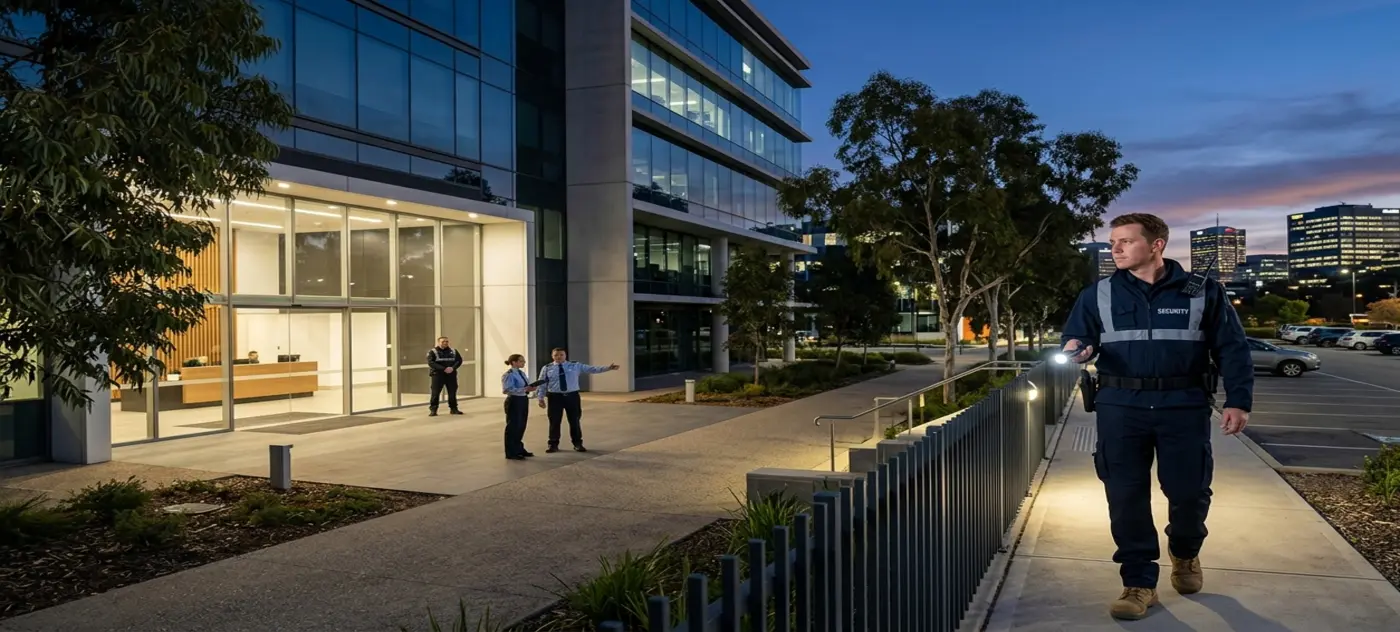
Our Corporate Security services are built around this exact gap — personalised protection for corporate settings, covering staff, visitors, and property without disrupting how your office actually runs day to day.
Corporate Security Services AU Businesses Should Compare Before Signing
Not every provider offering corporate security services AU wide covers the same ground. Before you hire security guards australia teams from any company, check whether the quote actually includes:
- On-site licensed guards for reception, access control, and floor patrols
- Mobile patrol coverage for after-hours and multi-site businesses
- Alarm response that gets a real person on-site fast, not just a phone call to you
- Sector-specific experience, whether that’s commercial, industrial, healthcare, or government environments
- Clear reporting after every shift, not a vague monthly summary
A cheap hourly rate that skips half of this list isn’t a saving — it’s a gap waiting to be found by whoever’s looking for one.
A Simple Corporate Risk Assessment Checklist You Can Run Today
Before you even call a provider, walk your own site with this shortened corporate risk assessment checklist. It won’t replace a professional evaluation, but it will tell you roughly where you stand.
- Are all entry and exit points visible, lit, and monitored after hours?
- Does anyone close the building alone, and do they have a clear emergency process?
- Is cash, stock, or sensitive data left accessible outside business hours?
- Has your team had an actual incident, near-miss, or safety complaint in the last 12 months?
- Would your current setup catch a break-in within minutes, or only find out the next morning?
If more than two of these leave you unsure, that uncertainty is your answer. A business security risk evaluation from a licensed partner will close those gaps with evidence rather than guesswork.
Australian Business Security Standards Worth Knowing
Every state regulates private security differently, but the fundamentals of Australian business security standards stay consistent: licensed personnel, documented training, and traceable incident reporting. Whether you’re operating in Melbourne, Brisbane, or the Gold Coast, your provider should be able to show current licensing for every guard on your site — not just a company-level accreditation. If they can’t produce that on request, that’s a red flag worth acting on before you sign anything.
Making the Decision: Corporate Risk Evaluation Australia Businesses Can Act On
Here’s the short version. If your business has grown, your incidents are increasing, your staff feel uneasy, or your compliance requirements have tightened — a proper corporate risk evaluation isn’t optional anymore. It’s the difference between a controlled decision made on your terms and a reactive one made after a loss.
FoxWatch Security has spent close to a decade delivering site assessments and tailored protection across Melbourne, Brisbane, and the Gold Coast. Our approach starts with the same assessment framework covered above, moves into a strategy built around your actual risk profile, and ends with trained, licensed guards deployed to close the gaps we find — not generic coverage sold off a rate card. Learn more about our team and history, or get in touch to arrange a site assessment.
Frequently Asked Questions
1. What is included in a corporate risk evaluation Australia businesses typically request?
It covers physical vulnerabilities, staff safety exposure, asset risk, and emergency response speed — assessed together, not as separate checklist items.
2. When to hire corporate security instead of managing it in-house?
When incidents repeat, staff raise safety concerns, your site has grown, or insurers request documented risk management evidence.
3. Is outsourcing corporate security more expensive than an internal team?
Usually not once you factor in licensing, training, rostering gaps, and liability — outsourced providers absorb those costs within the service fee.
4. What Australian business security standards should a provider meet?
Every guard should hold a current state security licence, documented training records, and provide traceable, shift-by-shift incident reporting.
5. How often should a business security risk evaluation be repeated?
Annually at minimum, and immediately after any incident, site expansion, extended trading hours, or change in cash or stock handling.
Comments are closed